


What Powers Talosai?
Talosai turns diverse public and financial signals into a structured, interpretable view of evolving country risk.
Diverse OSINT-Derived Signals
Monitors attributable, time-stamped public sources to detect sustained changes in attention, tone, and pressure.
Proprietary Risk Intelligence Model
Structures, weights, and interprets signals within Talosai’s six-domain country-risk framework.
Trajectory & Convergence Analysis
Measures direction, momentum, persistence, and cross-domain interaction to surface early-warning patterns.
Together, these inputs provide an integrated assessment of risk direction, drivers, evidence strength, and decision relevance.
From Monitoring to Decision-Relevant Insight
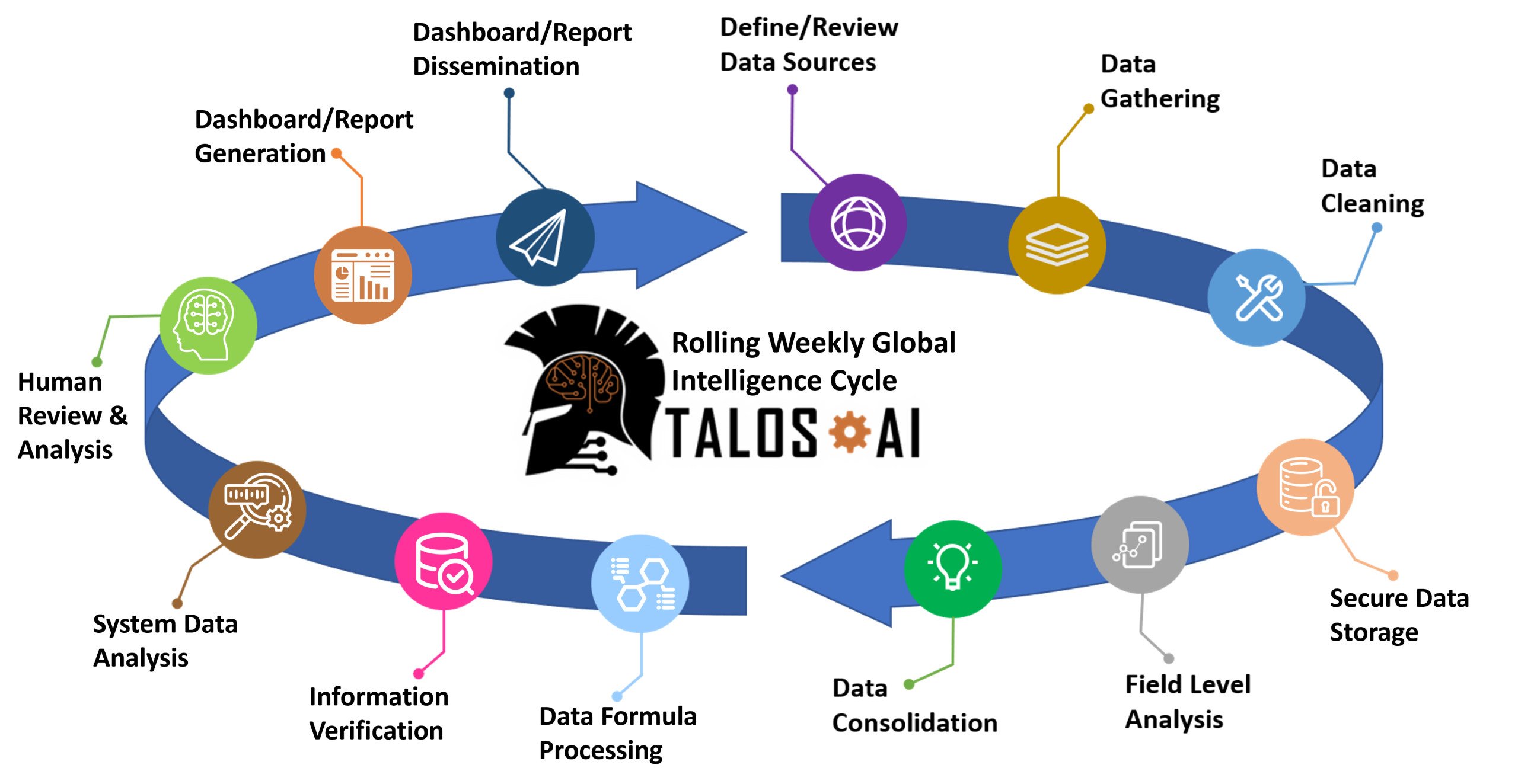
Talosai structures and updates country-risk signals to show where conditions are changing, which pressures are driving the shift, and whether the change appears isolated or systemic.
Updated Risk Measures
Provides refreshed domain and composite indicators showing where pressure is increasing, easing, or concentrating.
Trend & Momentum Analysis
Shows whether conditions are deteriorating, stabilizing, reversing, or building gradually over time.
Decision Context
Pairs dashboards and downloadable data with written assessments explaining the meaning, evidence, and planning implications of observed changes.
Analytical Depth for Anticipatory Decisions
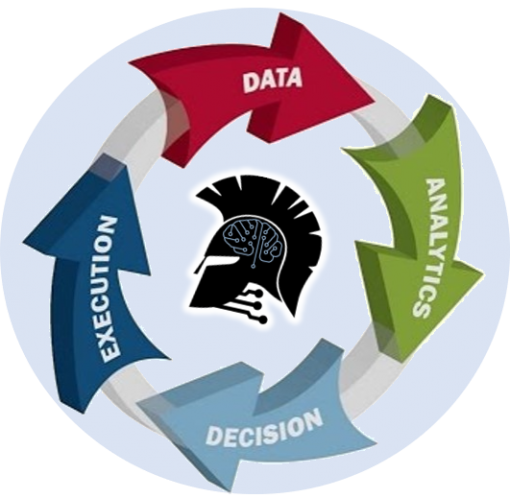
The challenge is no longer access to information; it is converting large volumes of public, financial, and operational data into structured intelligence that clarifies direction, momentum, and systemic risk.
Talosai helps organizations move from descriptive awareness to anticipatory risk management by showing where pressure is building, which domains are driving it, and whether signals are reinforcing, stabilizing, or diverging.
Dynamic Country Risk for Business Decisions
Talosai supports due diligence, exposure management, market-entry planning, personnel risk assessment, and scenario planning by showing how country conditions are changing and which shifts could affect operations, supply chains, investments, or strategic assumptions.
Early Warning for Government Planning
Talosai supports earlier warning by monitoring domain convergence, momentum shifts, signal persistence, public concern, narrative pressure, and currency movement across governance, economy, society, defense, health, and psychological strain. This helps government users move from descriptive monitoring to anticipatory planning.
Evidence-Backed Situational Awareness
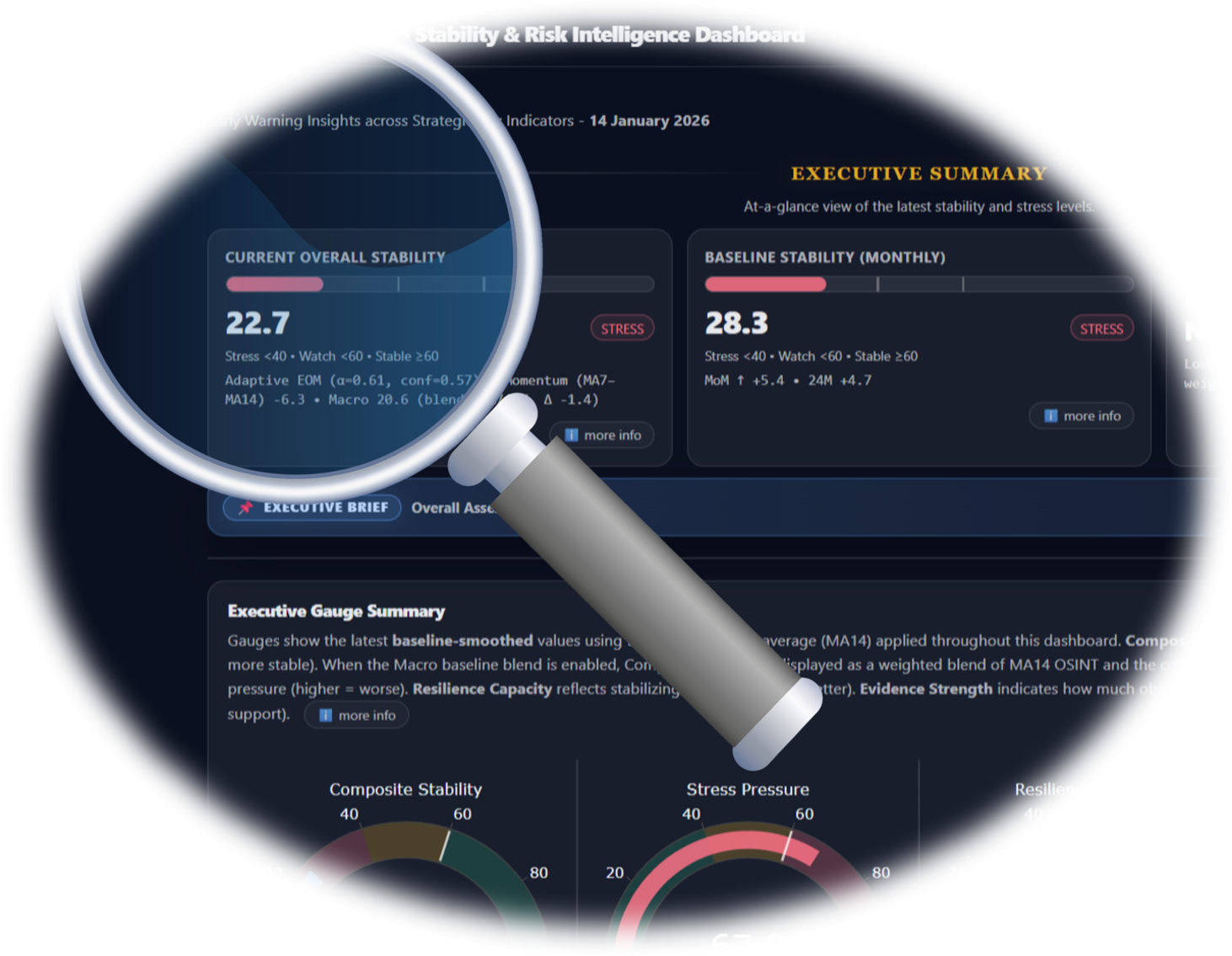
Talosai combines OSINT narrative monitoring, public search behavior, and currency signals to help users identify emerging pressure, understand cross-domain relationships, and assess whether risk is isolated, accelerating, or spreading.
Trend, correlation, lead-lag, and forecast analysis help researchers, policymakers, business leaders, and international-affairs professionals interpret changing conditions between traditional reporting cycles.
Downloadable indicator datasets allow users to compare Talosai signals with internal risk models, financial assumptions, operational metrics, proprietary data, and scenario-planning frameworks.