
Country Risk Intelligence Built to Show Change Over Time
Talosai is a dynamic country-risk intelligence system that transforms continuously monitored open-source data into decision-grade insight. While traditional country scores and profiles provide a useful baseline, Talosai delivers a weekly recalculated view of emerging risk and its trajectory across six interconnected domains: governance, economy, society, national defense, health, and psychological strain.
By integrating structured OSINT, public search behavior, currency movements, historical baselines, and proprietary analysis, Talosai reveals what is changing, what is driving that change, and why it matters. The system identifies whether pressures are reinforcing one another or moving in different directions—providing timely, actionable insight into evolving country conditions and their relevance to strategic and operational decisions.
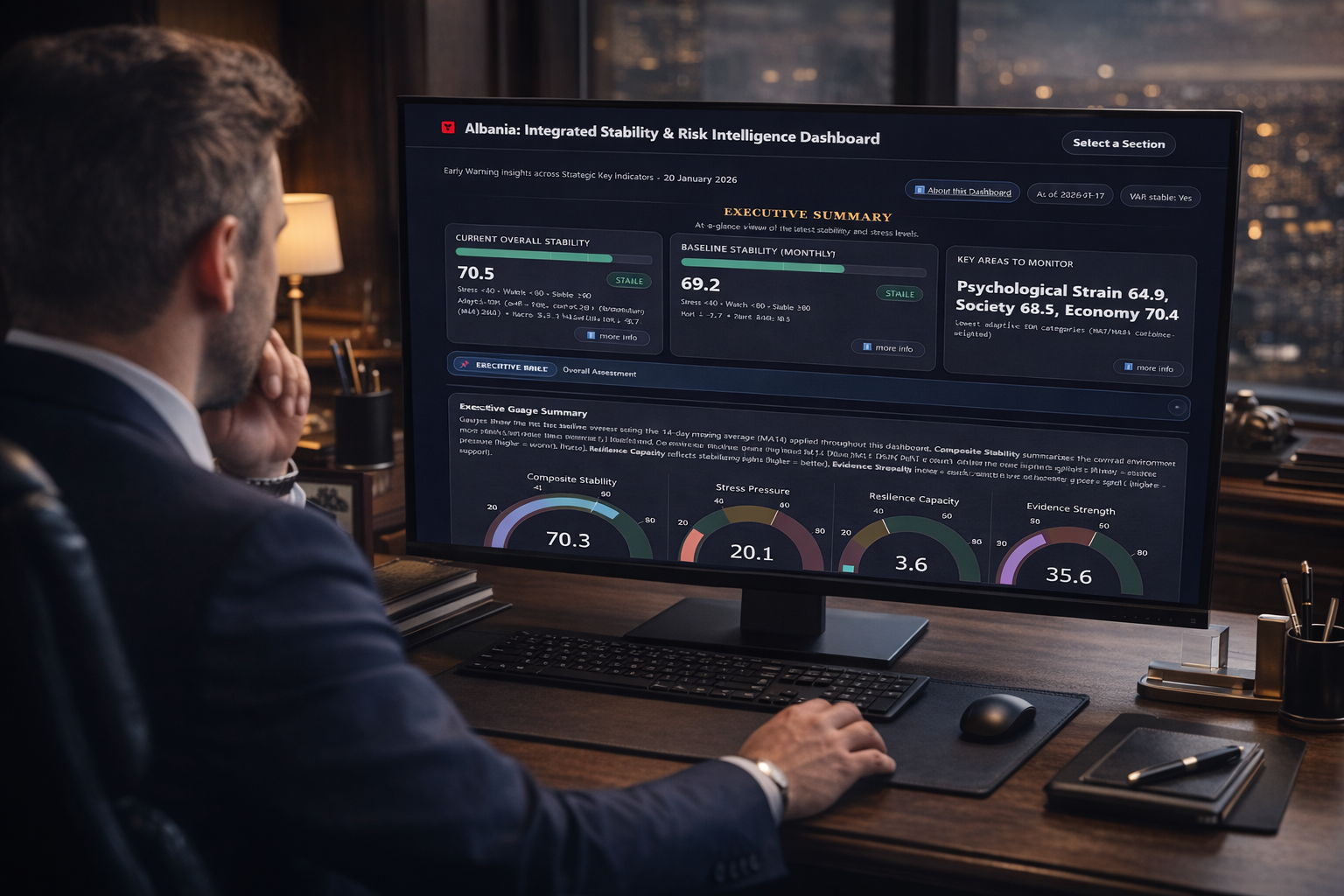
Talosai turns monitored signals into normalized indicators, interpreted trends, outlook ranges, and written assessments that support timely, evidence-informed decisions.
Measuring Country Risk as It Evolves
Many products summarize country conditions through fixed scores, periodic reports, or broad reference rankings. Talosai complements those tools by showing direction, momentum, persistence, and cross-domain interaction between reporting cycles.
By integrating diverse OSINT-derived signals, Talosai’s proprietary country-risk data, historical baselines, and contextual analysis, the platform helps identify whether pressure is isolated, accelerating, stabilizing, or spreading across domains.
Talosai helps decision-makers answer:
- Is country risk improving, deteriorating, or remaining stable?
- Are pressures becoming systemic or staying isolated?
- Which domains are driving the current risk picture?
- Are monitored signals reinforcing one another or diverging?
- Which indicators may be leading broader instability?
Each dashboard pairs interactive analysis with downloadable indicator datasets and written assessments that explain what is changing, why it matters, how strong the evidence is, and how the signals may affect planning.
From Dashboard View to Decision Context
Talosai provides interactive, evidence-backed views of country risk, trajectory, and stress conditions. Each dashboard brings together updated indicators, historical baselines, trend movement, correlation analysis, lead-lag relationships, and forecast ranges.
Users can explore the analysis directly, review the underlying datasets, and connect risk signals to due diligence, planning, early warning, and operational decision-making.
Explore changing risk conditions.
Review and reuse indicators.
Understand implications.
Providing decision-ready situational awareness and early warning.
Talosai integrates diverse OSINT-derived signals with proprietary country-risk analysis to produce structured indicators and written interpretation. Users can examine what is changing, why it matters, and the underlying data used to assess confidence, persistence, and cross-domain interaction.
Rather than reacting to isolated headlines or static country scores, Talosai focuses on detecting sustained shifts in pressure, narrative direction, public concern, and broader risk conditions over time. These changes are assessed through accompanying analytical reporting that emphasizes trajectory, momentum, and potential implications. The resulting indicators are processed into structured datasets that are available for direct download through the Country Intelligence System.
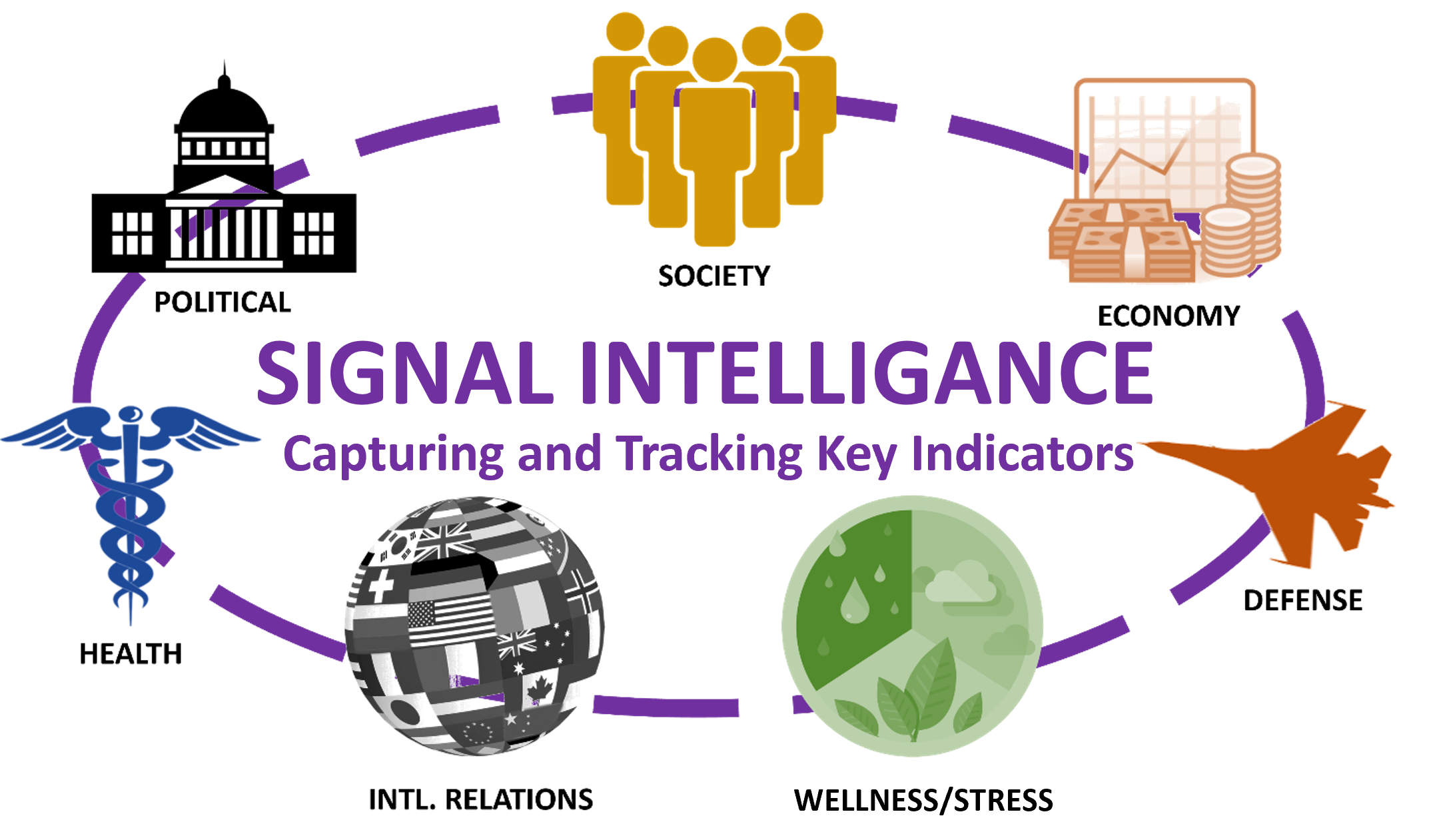
Talosai assesses country risk as an interacting system, not as isolated topics. Each domain contributes to a broader picture of trajectory, momentum, and systemic pressure.
Six Interacting Indicators of Risk & Stability
Talosai organizes country risk into six interacting domains that help users understand where pressure is forming, which systems are most exposed, and how different conditions may reinforce one another over time.
- Governance: legitimacy, rule of law, leadership credibility, and institutional trust.
- Economy: cost-of-living pressure, fiscal stress, growth narratives, and confidence.
- Society: social cohesion, protests, crime, labor unrest, and public safety.
- National Defense: security incidents, conflict dynamics, readiness, and escalation risk.
- Health: public health capacity, system strain, and shock resilience.
- Psychological Strain: longer-term stress indicators, including mental health and substance-use pressures.
These domains are evaluated through Talosai’s proprietary country-risk intelligence model and supported by diverse OSINT-derived signals, public concern indicators, financial data, historical baselines, correlation analysis, lead-lag patterns, and forecast ranges, allowing users to assess trajectory, momentum, and systemic interaction, not just static country status.
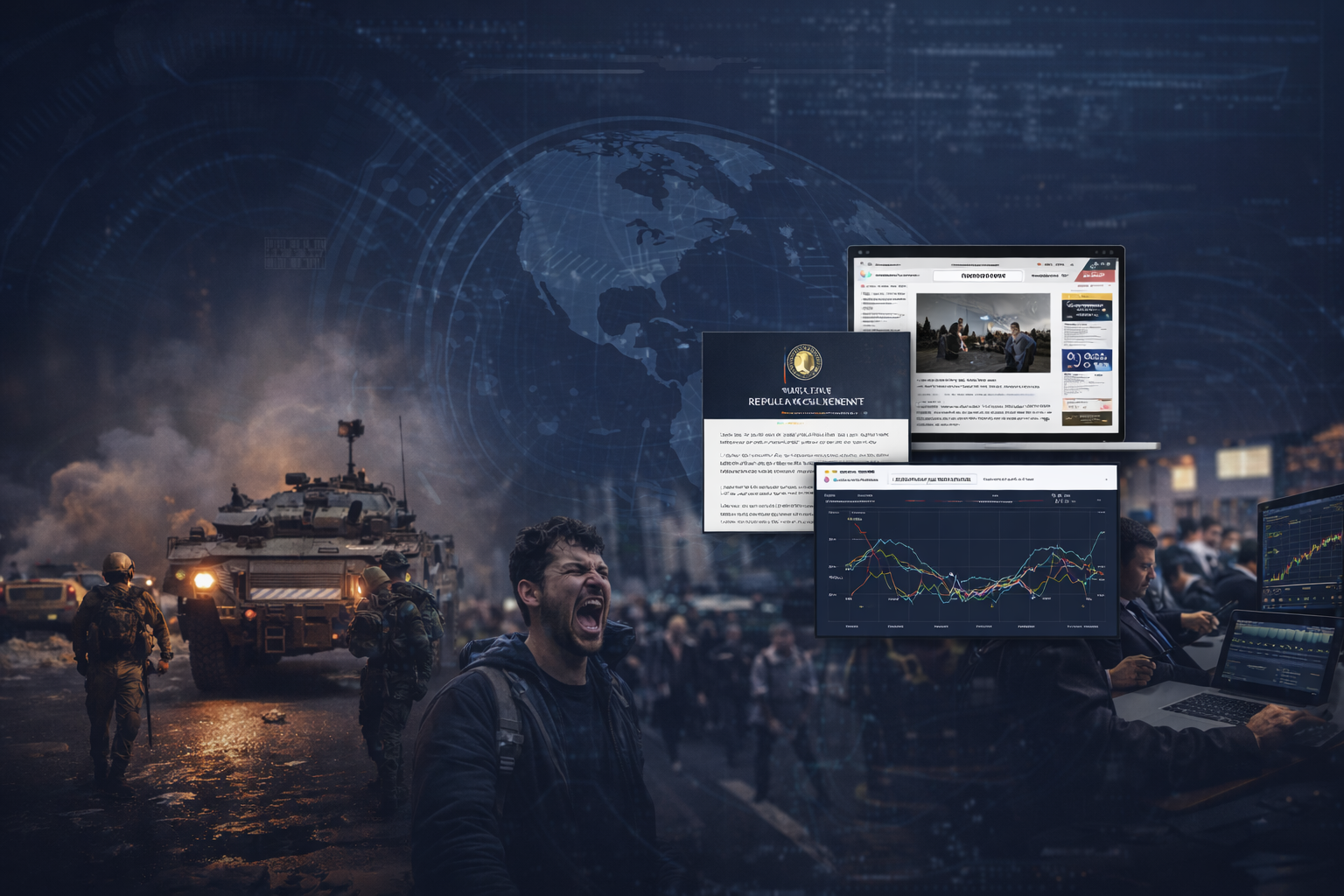
Talosai emphasizes structured, attributable public reporting rather than short-lived online noise, allowing the system to measure sustained changes in pressure, framing, and narrative direction over time.
How Talosai Uses Publicly Available Information
Talosai incorporates publicly available, web-published information that is edited, attributable, and time-stamped. These sources help the system measure how country conditions are being reported, interpreted, and discussed across political, economic, security, health, and societal domains.
Source categories include:
- Reputable local, regional, and international news reporting.
- Official government statements, announcements, and press releases.
- Publicly available institutional, policy, financial, health, security, and sector-specific reporting.
- Other web-indexed public material that can be structured into time-series indicators and analytical datasets.
Social media is intentionally excluded.
The objective is not to amplify headlines or track isolated opinions. Talosai evaluates persistent shifts in narrative pressure, public concern, and broader risk conditions, then integrates those findings with financial indicators and contextual analysis to support evidence-based situational awareness.
How Talosai Uses Publicly Available Information Talosai incorporates public, web-published material that is edited, attributable, and time-stamped, including:
-
Reputable local, regional, and international news reporting
-
Official government statements, announcements, and press releases
-
Publicly available institutional, policy, financial, health, and security reporting
Social media is intentionally excluded.
The objective is not to amplify headlines or “vote-count” opinions.
Talosai focuses on detecting persistent shifts in narrative pressure, public concern, and broader risk conditions that may indicate emerging stress, resilience, instability, or escalation risk. These signals are integrated with Talosai’s proprietary country-risk intelligence and supporting analytical models to provide decision-relevant contextual analysis focused on sustained change rather than short-term noise.
Designed for decision-makers and analysts who need an up-to-date, evidence-based understanding of country stability, risk, and direction—supported by interactive dashboards, normalized indicator data, and contextual analysis.
Talosai combines continuous risk monitoring, proprietary country-risk intelligence, and analytical interpretation to support real-world decision-making across sectors.
Private Sector / Industry
Supports market entry, country due diligence, operational risk assessment, ESG exposure analysis, and scenario planning across sectors including energy, infrastructure, finance, life sciences, insurance, and professional services.
Public Sector / Government
Provides situational awareness, partner-country monitoring, early warning, and contingency support for foreign affairs, defense, development, health, and financial authorities.
Multilateral, Research & Policy
Enables cross-country monitoring, program prioritization, applied research, forecasting, strategic foresight, and comparative risk analysis.