
USE CASES
Supply-Chain Disruption & Logistics Resilience
How supply-chain, procurement, logistics, and operations teams can use Talosai to detect early disruption signals, separate persistent risk from short-term noise, and translate multi-source country risk intelligence into routing, inventory, vendor, and continuity decisions.
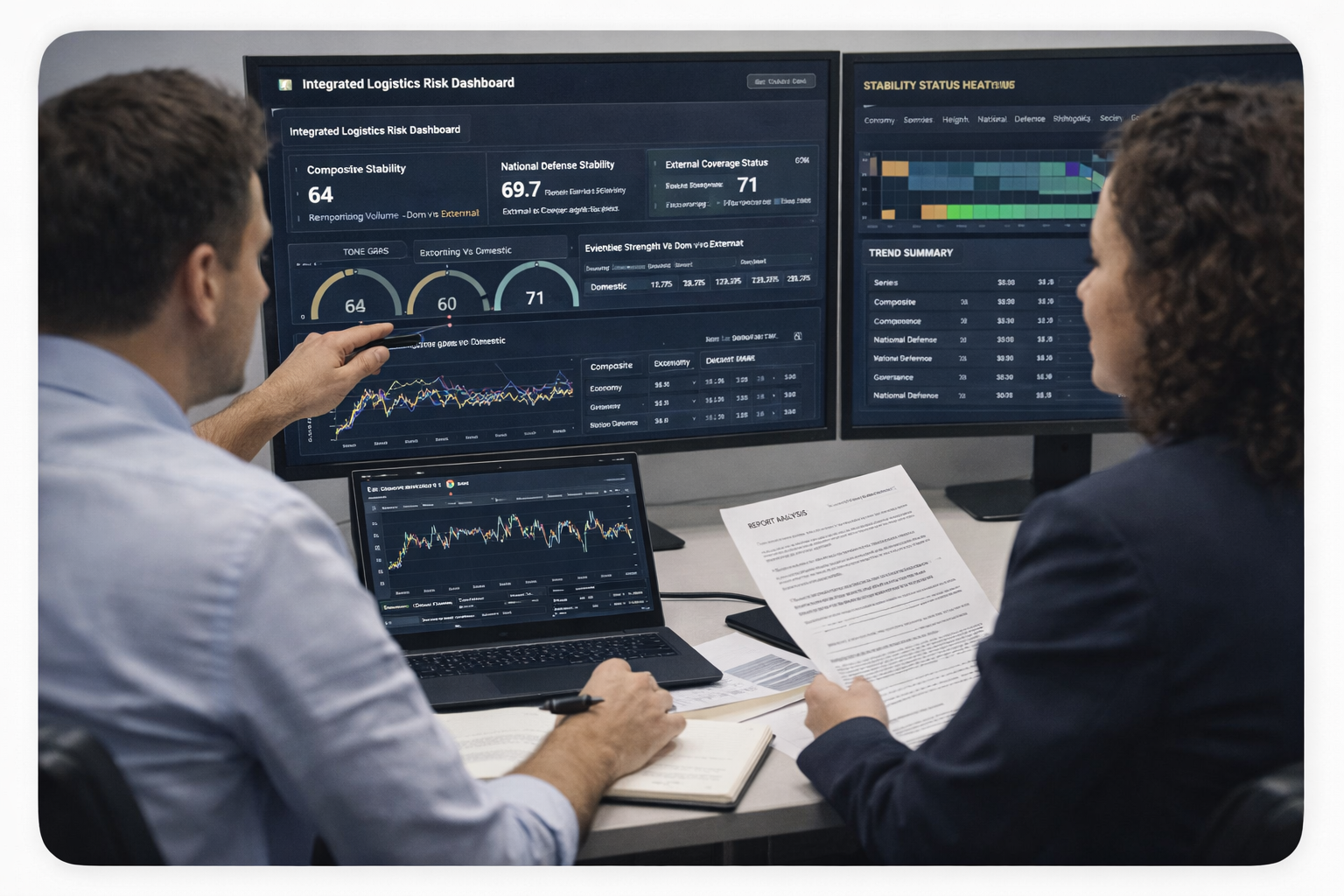
Talosai helps logistics teams combine OSINT narrative pressure, public search concern, currency movement, historical baselines, evidence diagnostics, and forecast ranges to identify when country conditions may threaten ports, corridors, border processes, labor availability, or supplier reliability.
Logistics and Continuity Planning
Earlier Warning as Disruption Risk Builds
When a company relies on a country as a critical transit, sourcing, or distribution node, early warning matters more than retrospective reporting. Rising cost pressure, labor disputes, protests near logistics corridors, regulatory tightening, border friction, currency volatility, or security incidents can each create operational drag before the disruption is visible in traditional logistics reporting.
Acting Early Without Overreacting
- Reacting too late, after congestion or labor stoppages are already widespread.
- Overreacting to short-lived protest coverage without persistence checks.
- Missing spillover from economic pressure into society and governance risk.
- Misreading external media surges as domestic operational risk.
- Taking costly rerouting actions without confidence checks.
A Structured Workflow for Logistics Resilience
Talosai functions as a disruption-risk measurement and interpretation system. Logistics teams can monitor country-level risk signals tied to real supply-chain failure modes, validate signal confidence, and pair dashboards with contextual analysis that explains what is changing, why it matters, and what decisions it informs.
What the Team Used
What Changes in the Logistics Decision?
- Move from reactive disruption response to measurable early-warning signals.
- Trigger rerouting and capacity booking earlier based on thresholds and momentum.
- Reduce unnecessary reroutes by requiring evidence strength and attribution checks.
- Connect country risk signals to specific inventory, vendor, and customer decisions.
- Improve cross-functional alignment between logistics, procurement, finance, and operations.